Bridging the gap
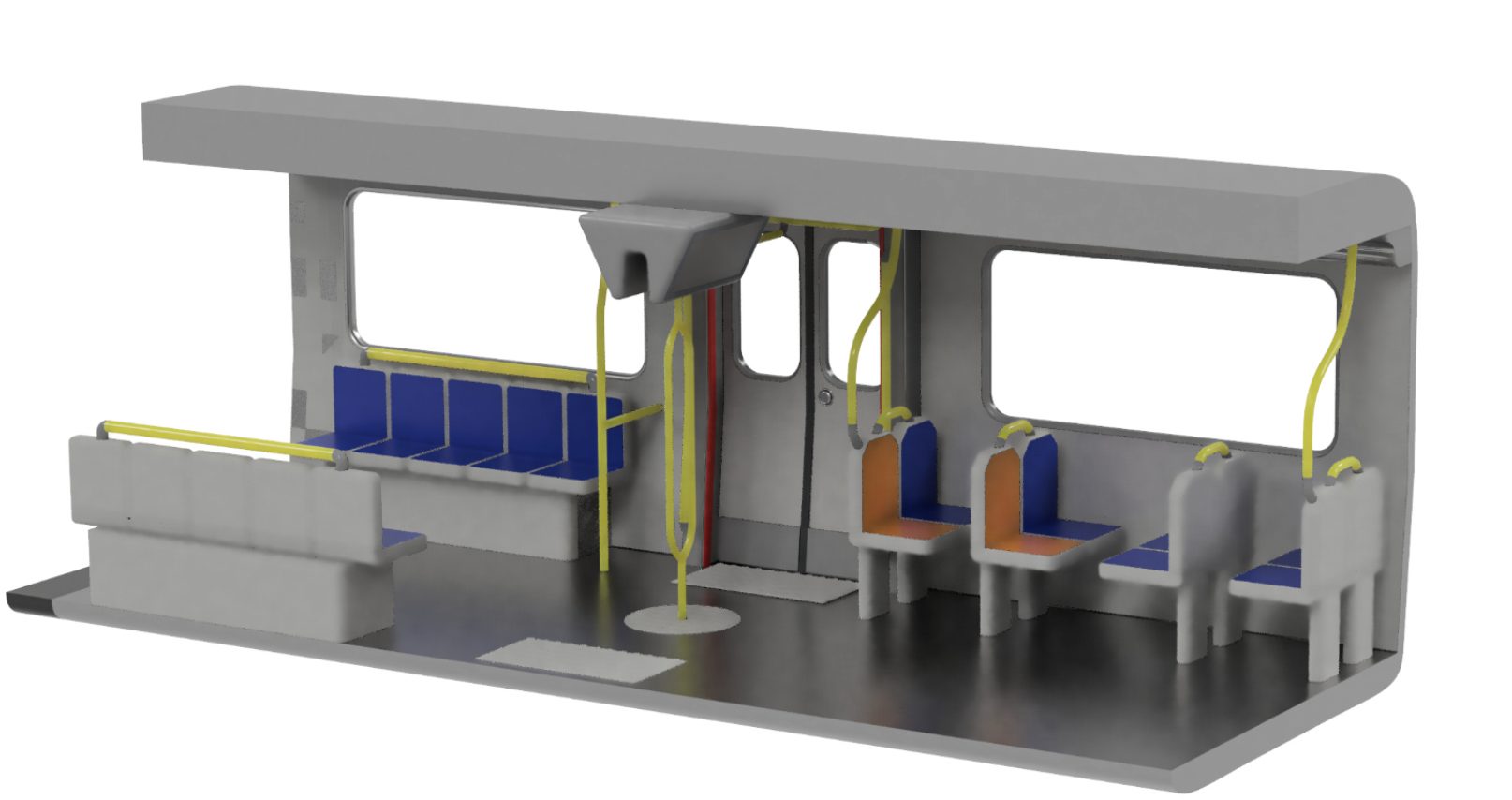
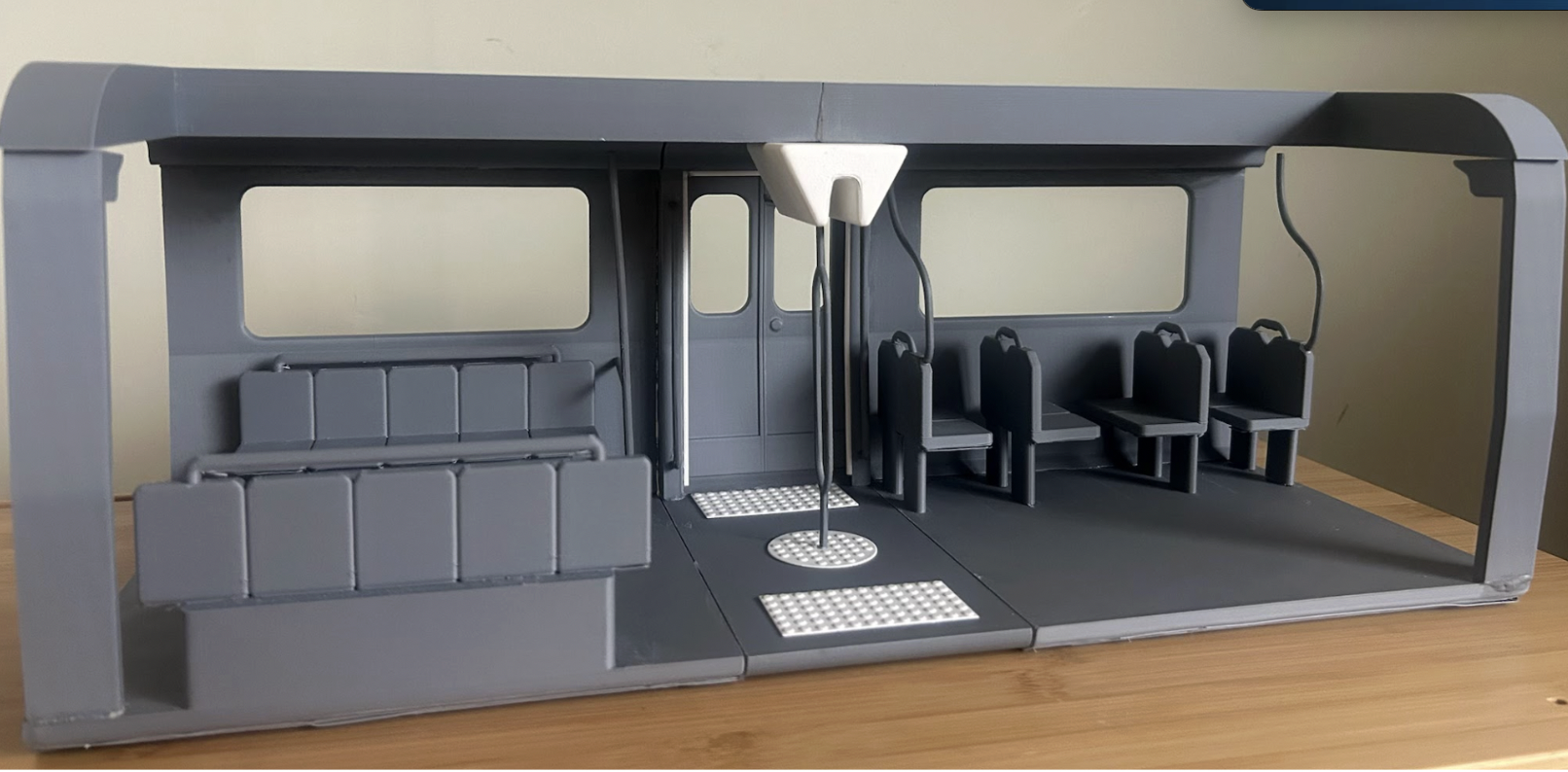
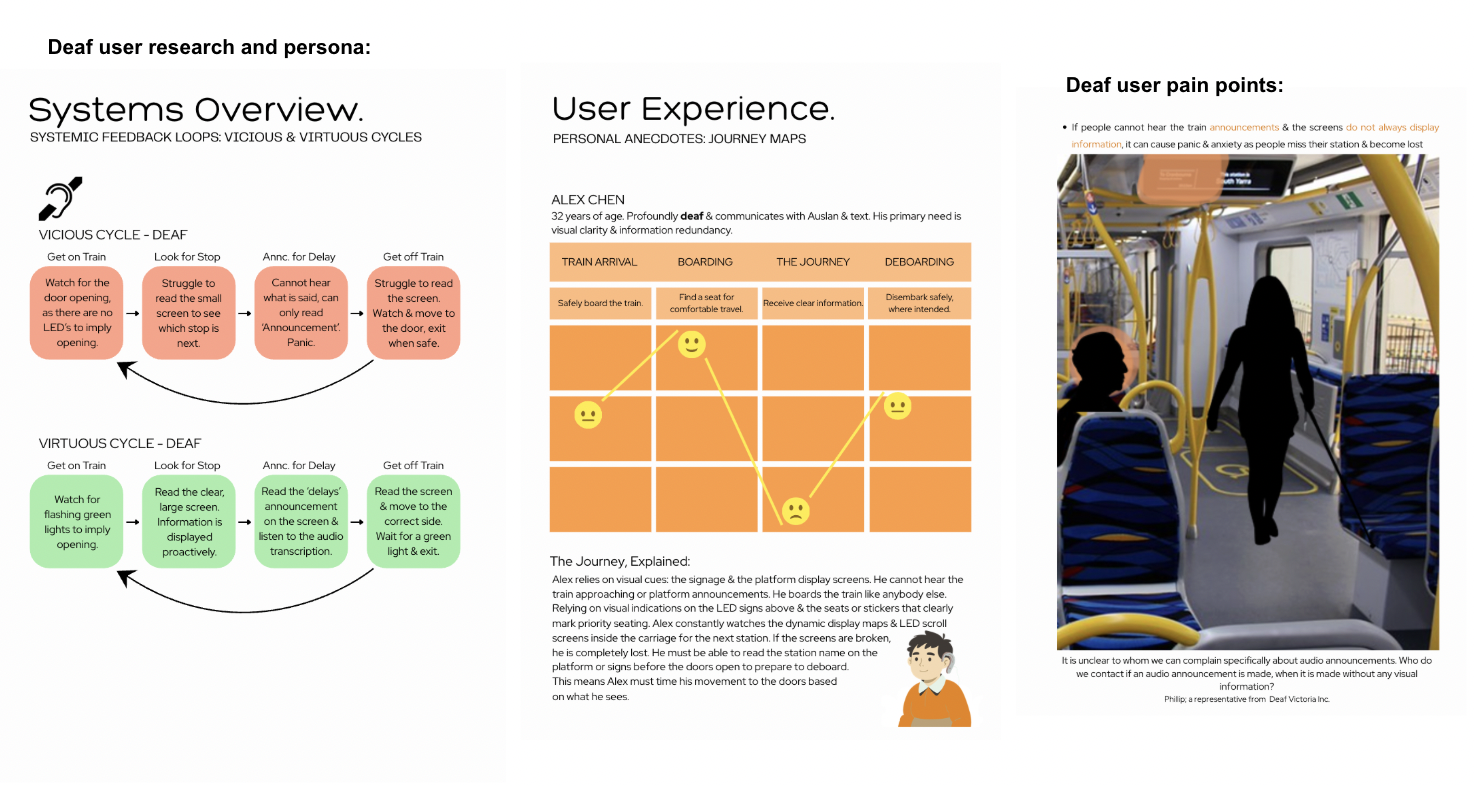
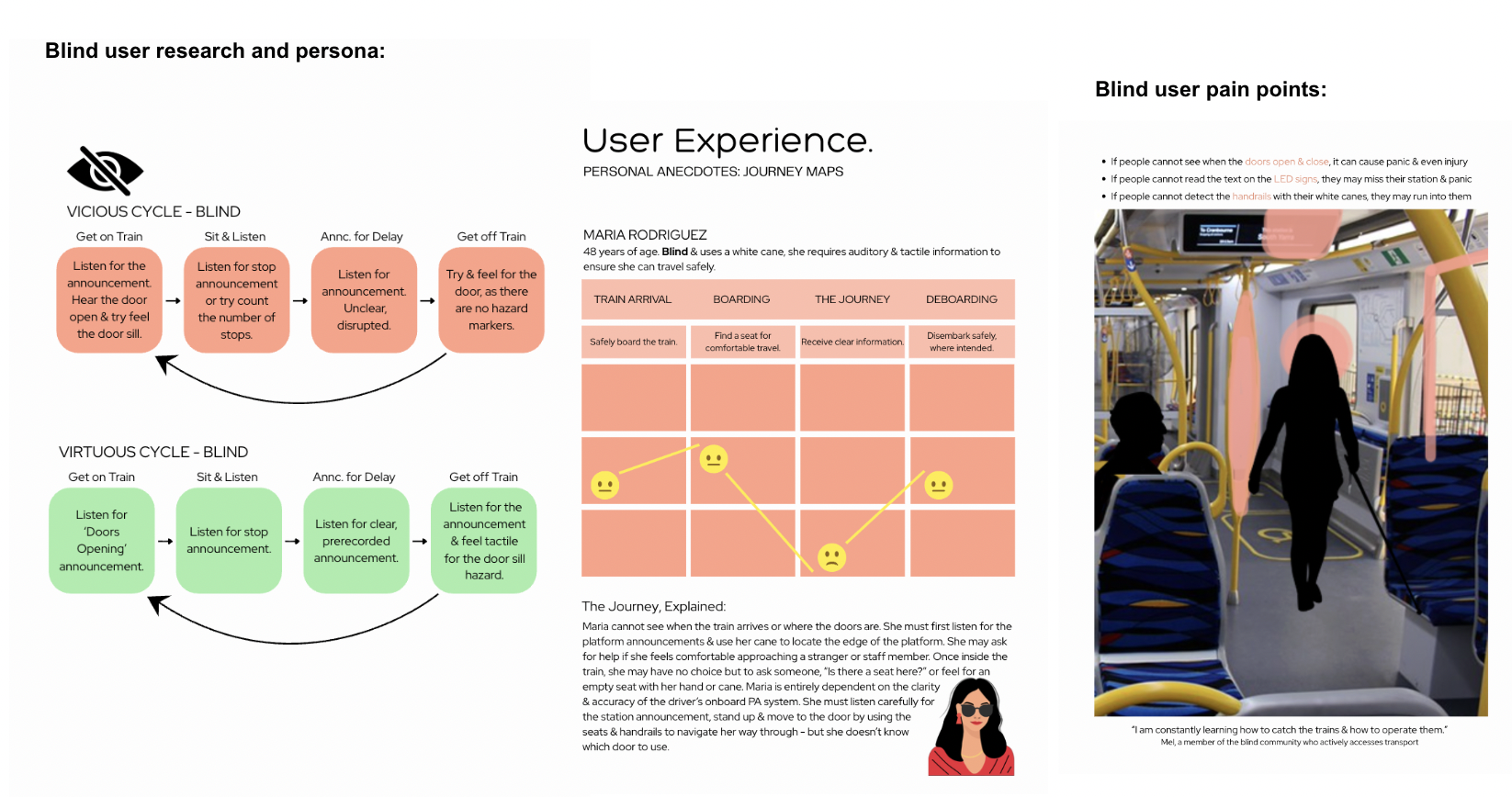
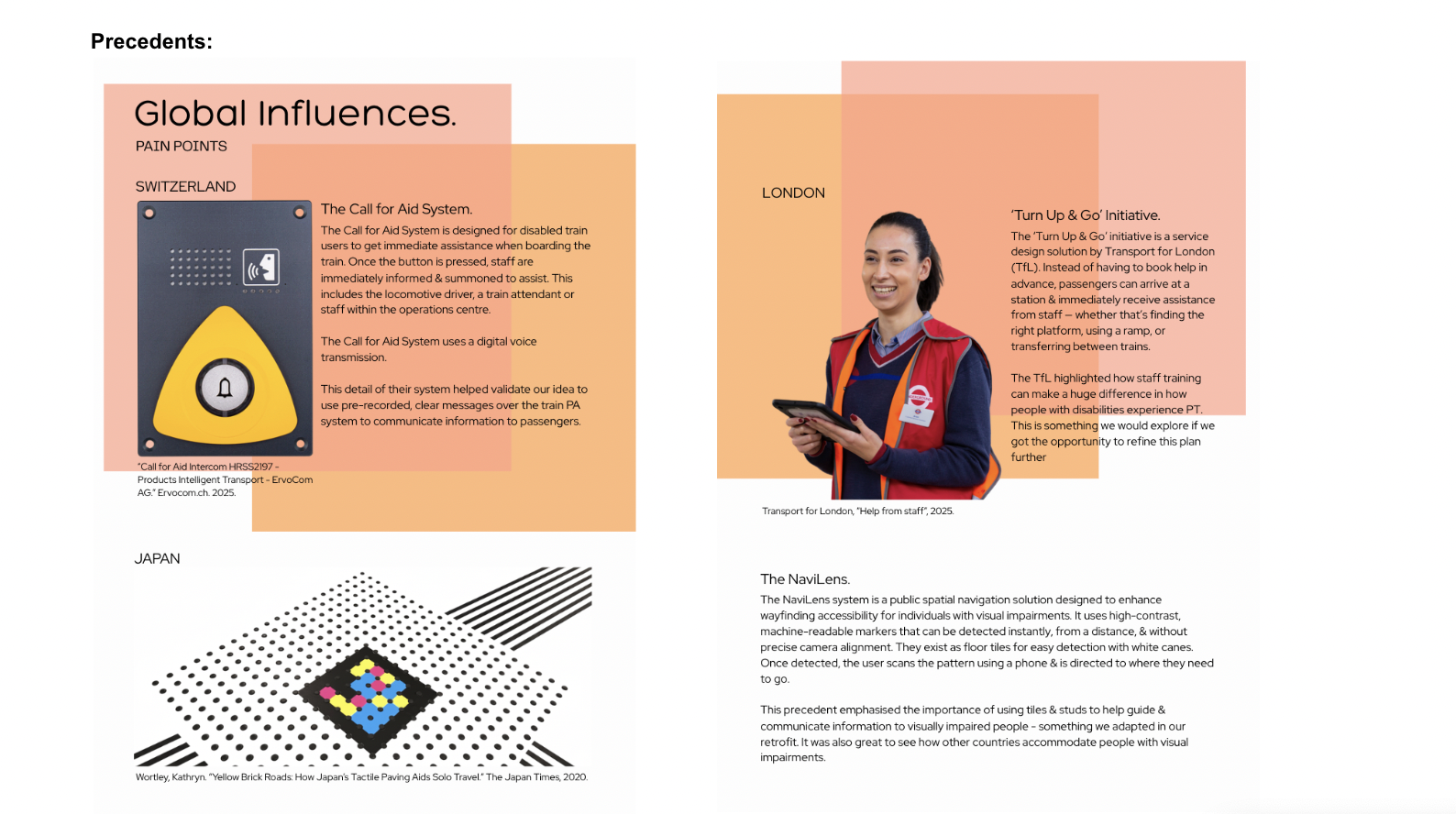
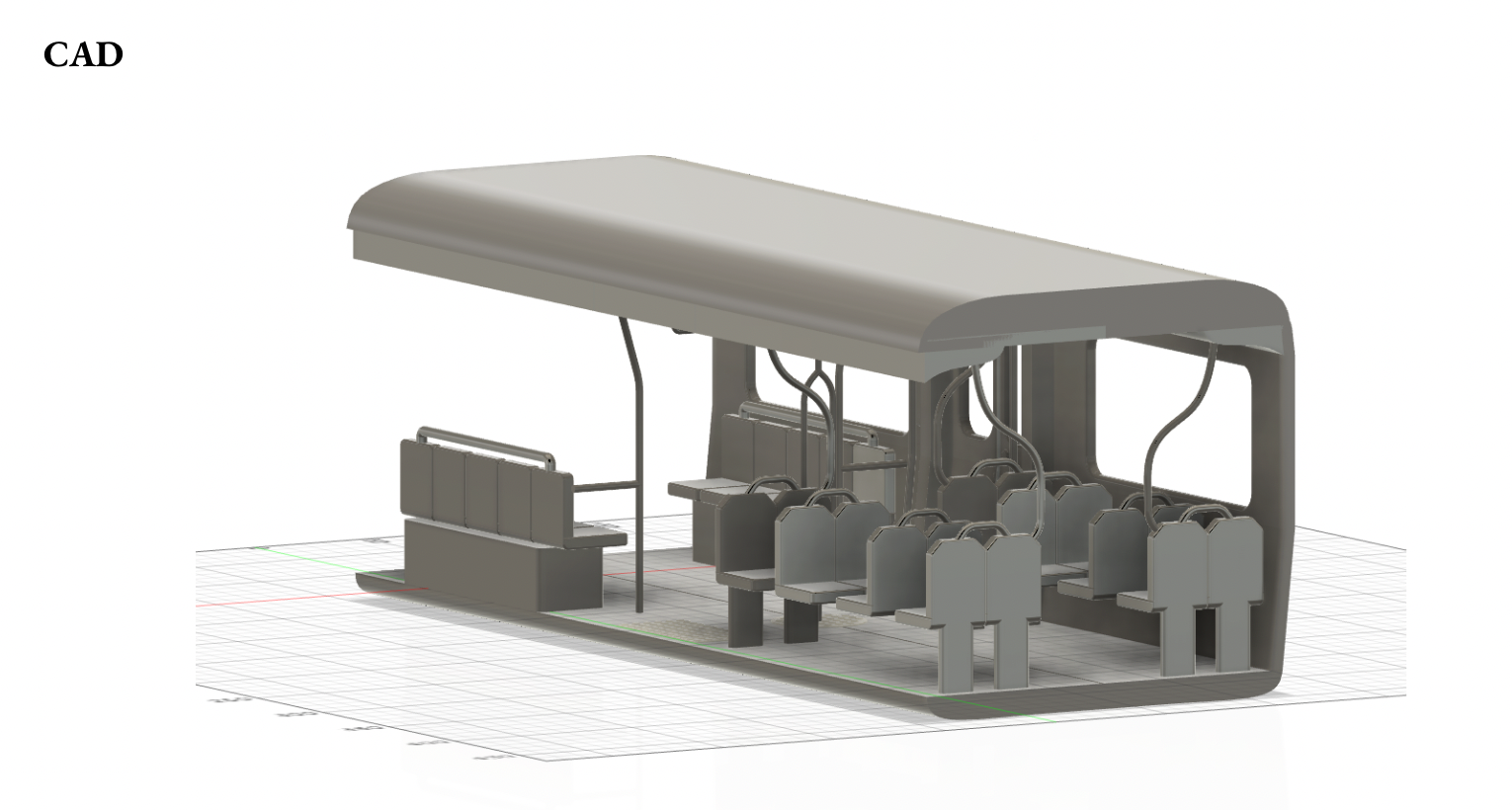
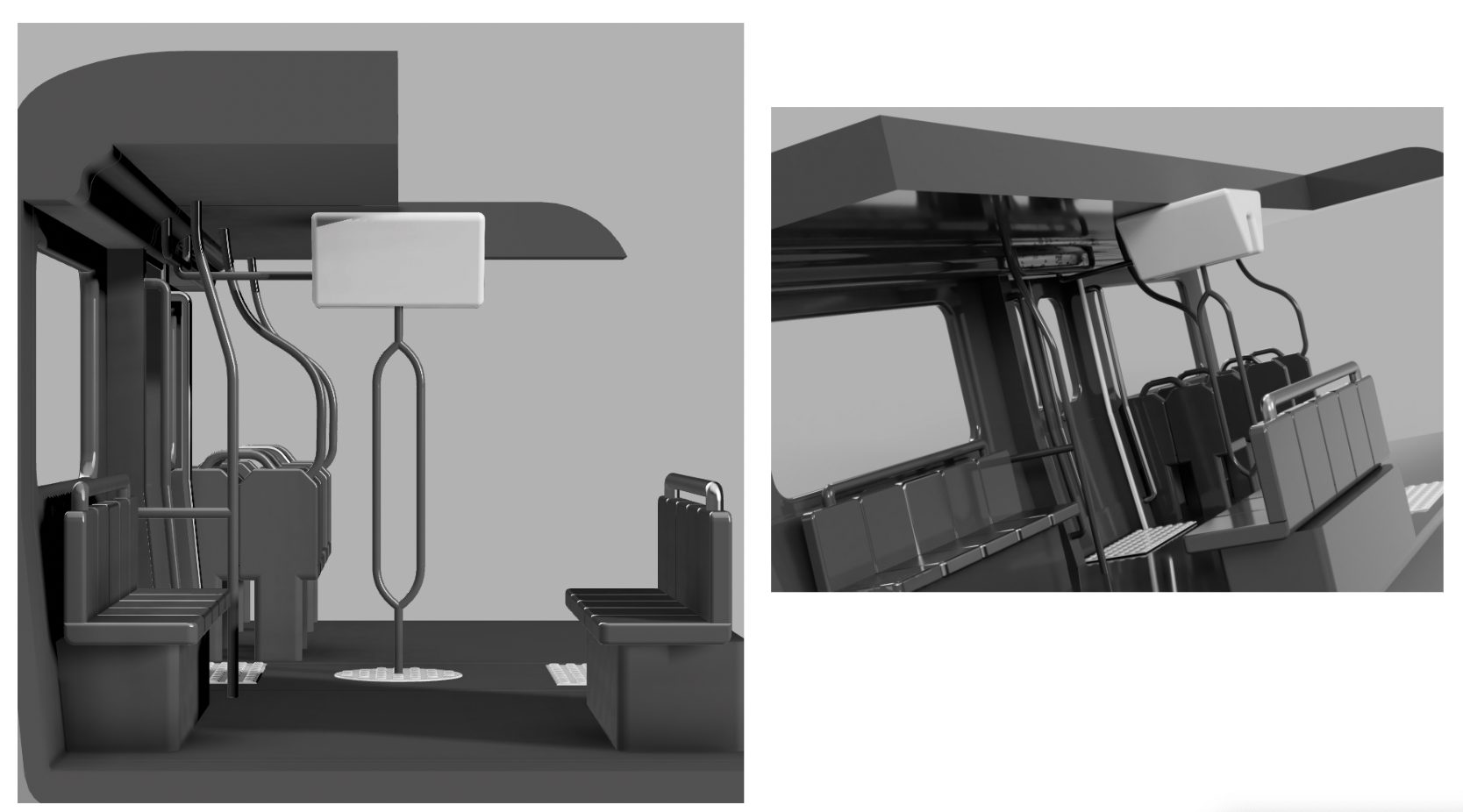
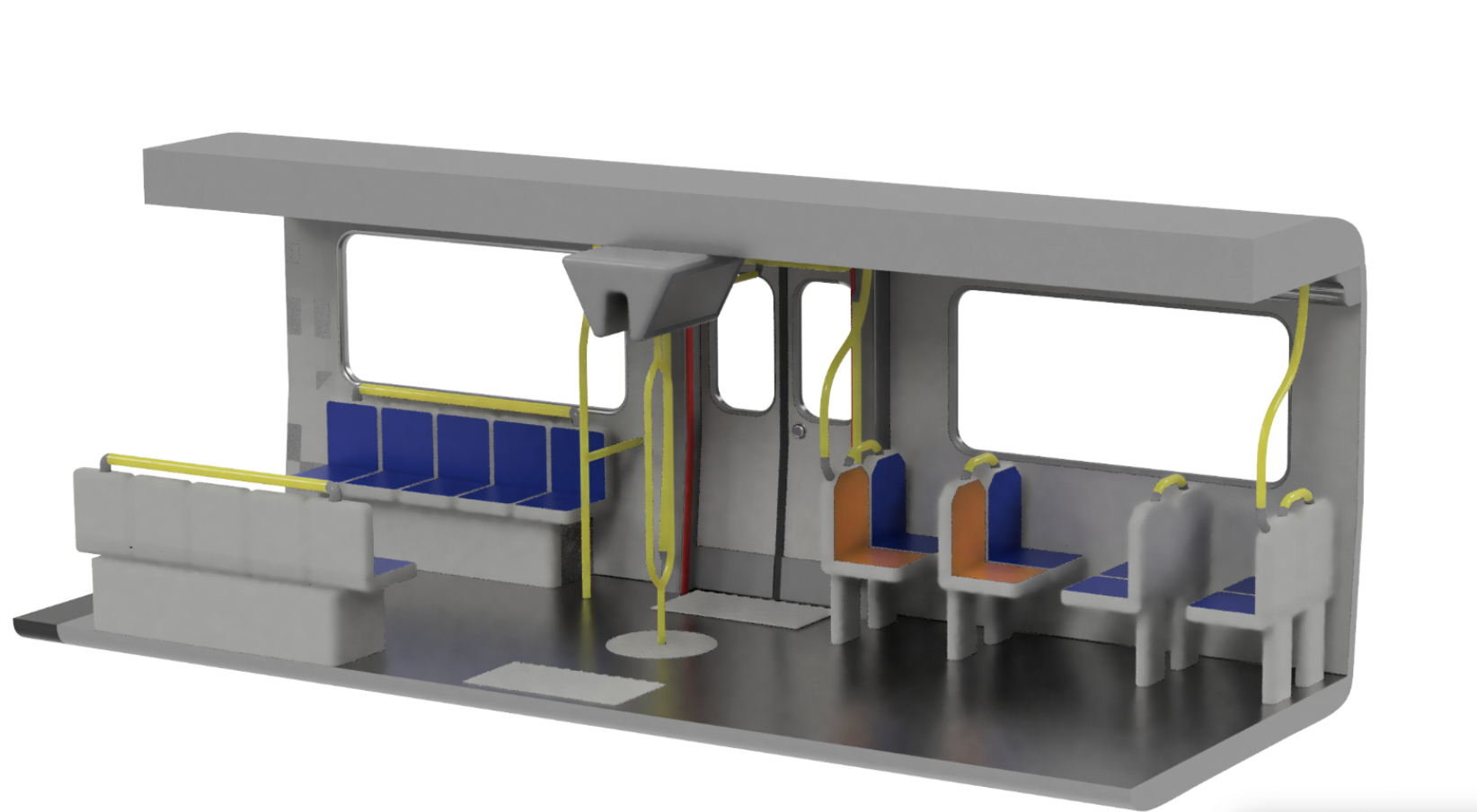
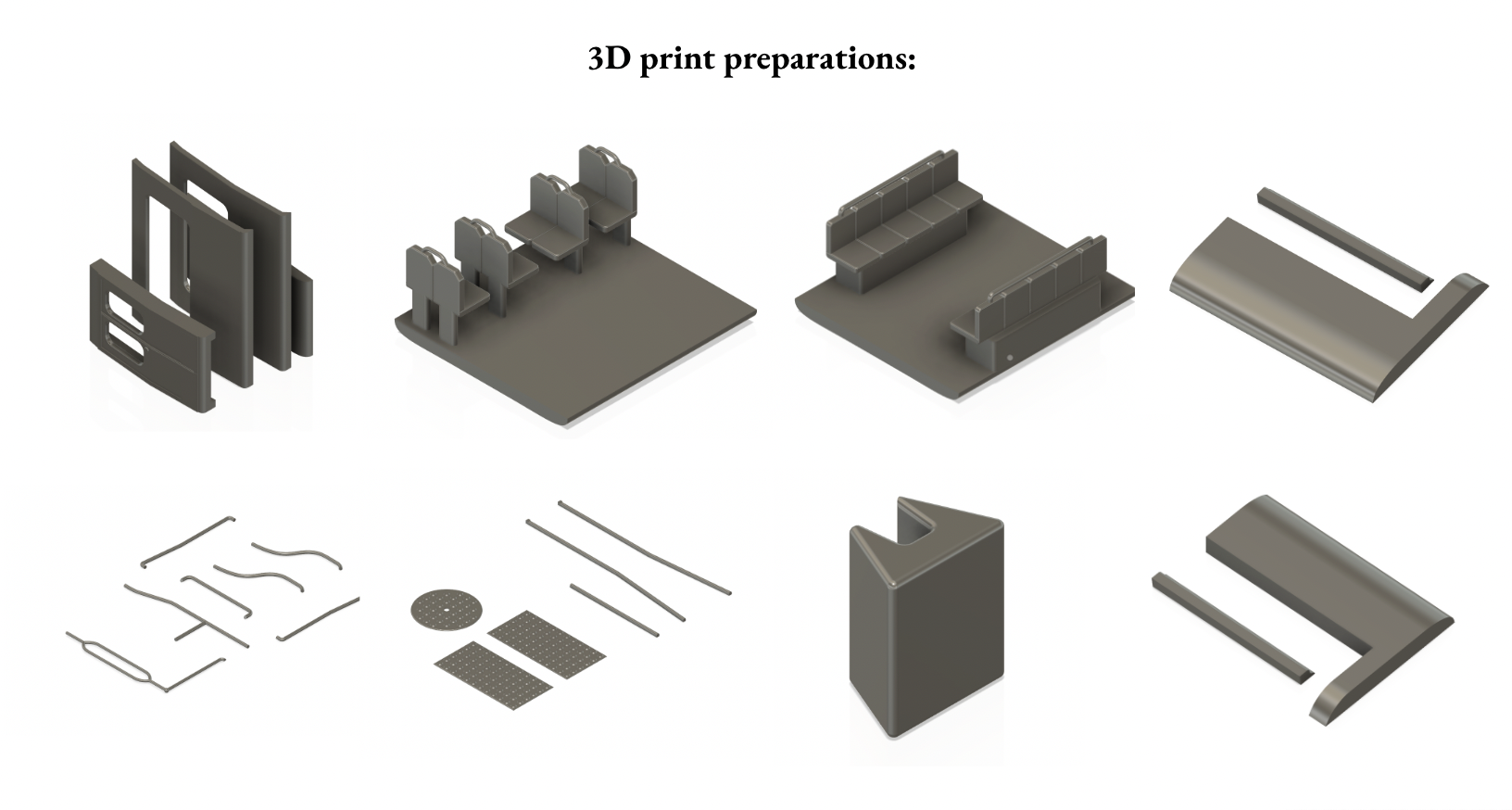
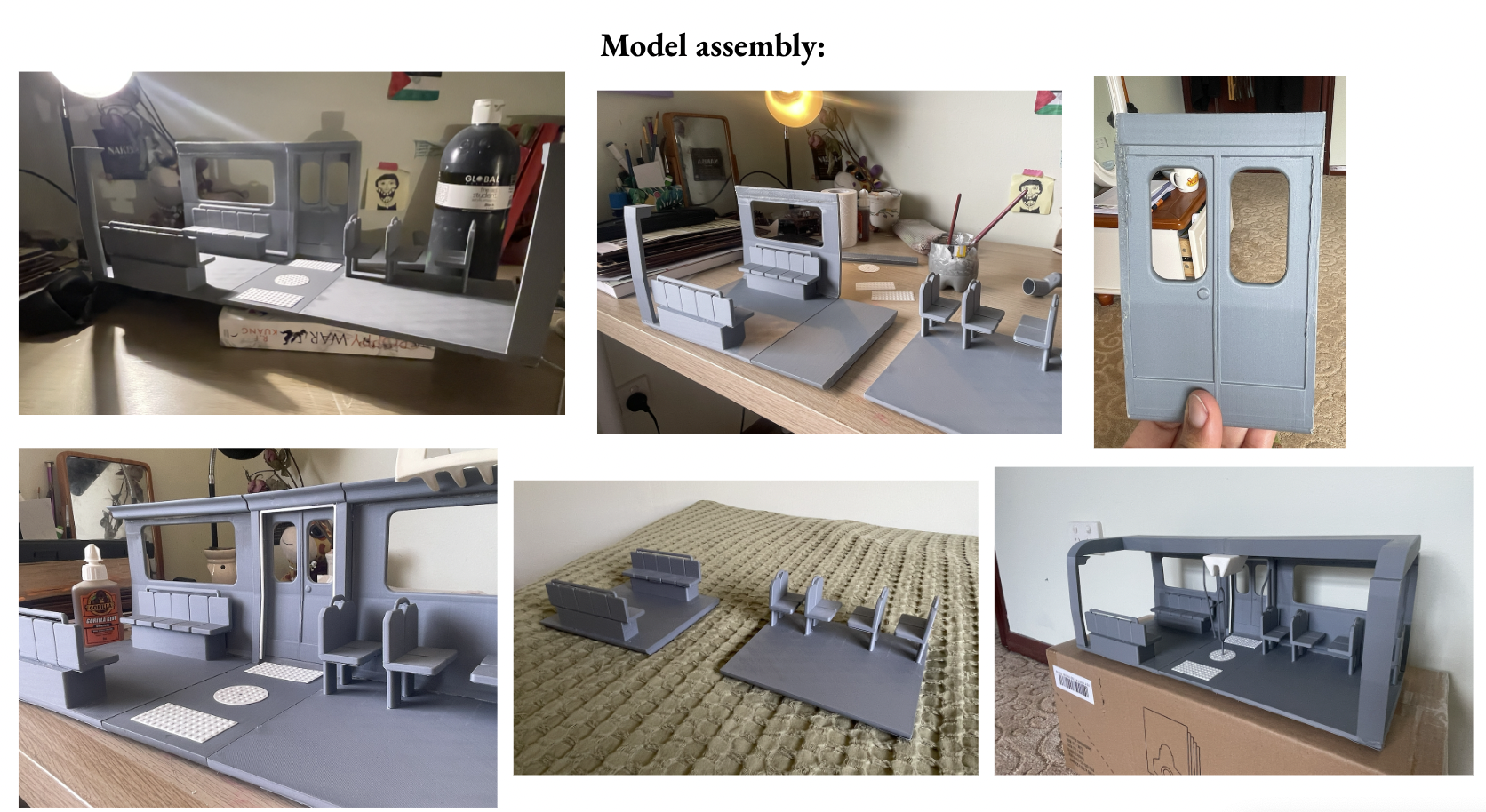
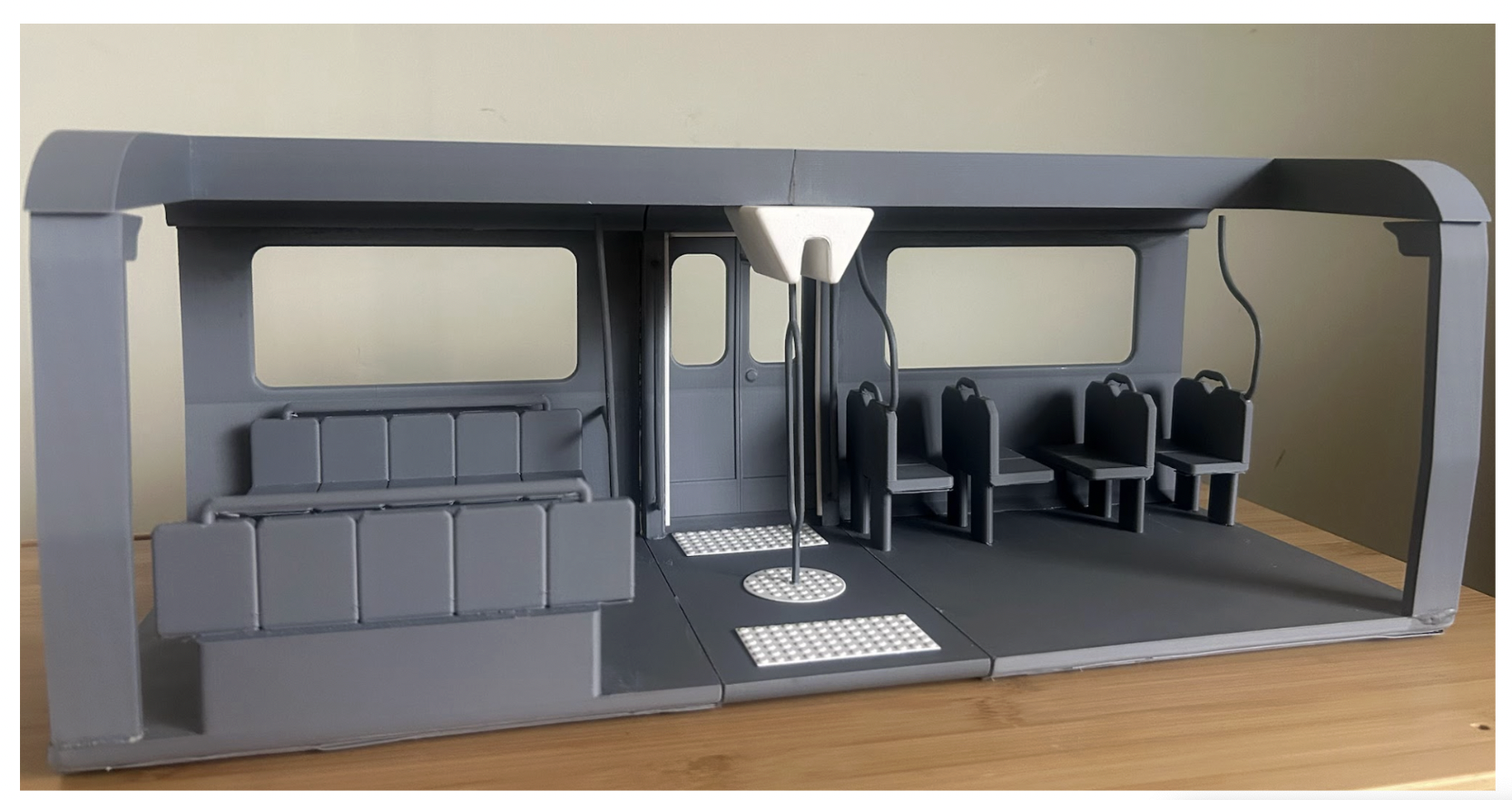
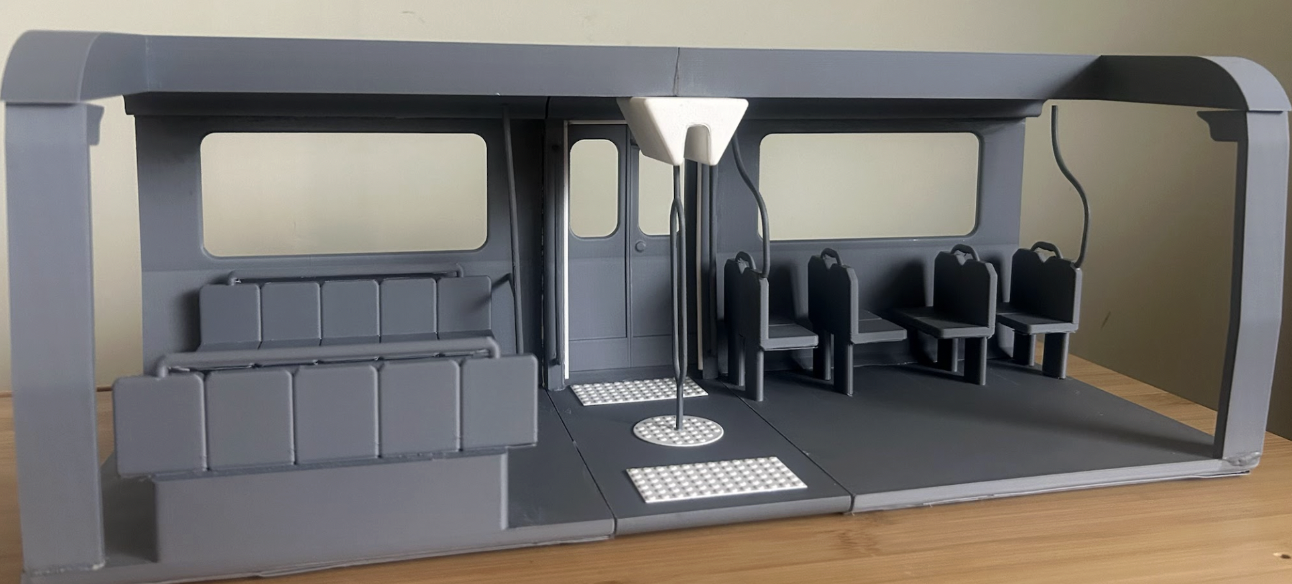
As part of a collaborative group project focused on improving accessibility and communication within Melbourne’s metro train network, we developed a modular retrofit package designed to be implemented cost-effectively across the existing carriage fleet, with a primary focus on deaf and blind passengers. Working in a team of three, my primary role centred on visual development and prototyping, where I was responsible for concept sketching, CAD modelling in Fusion 360, and 3D printing and assembling a physical carriage model to clearly communicate our proposed design interventions.
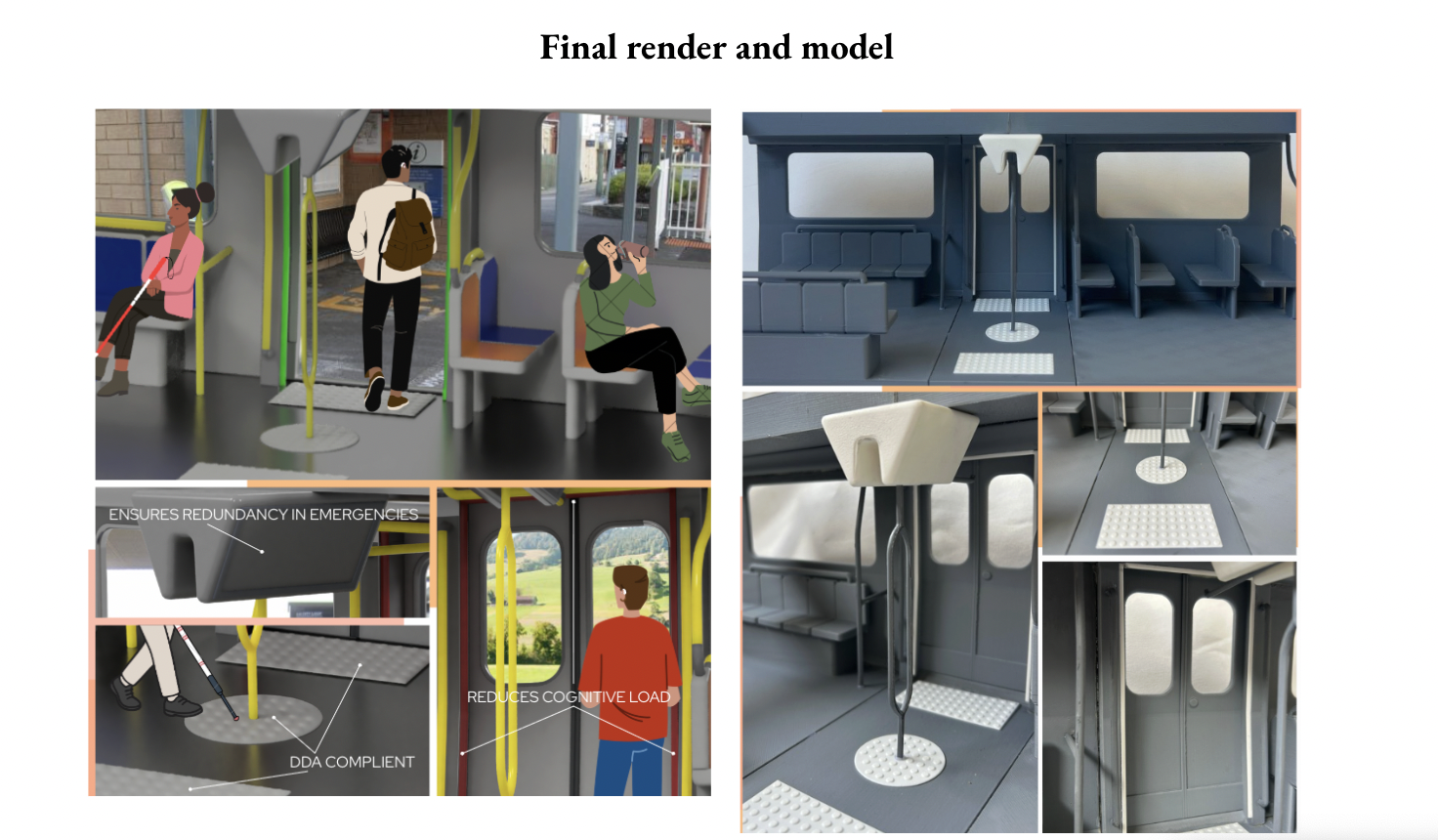
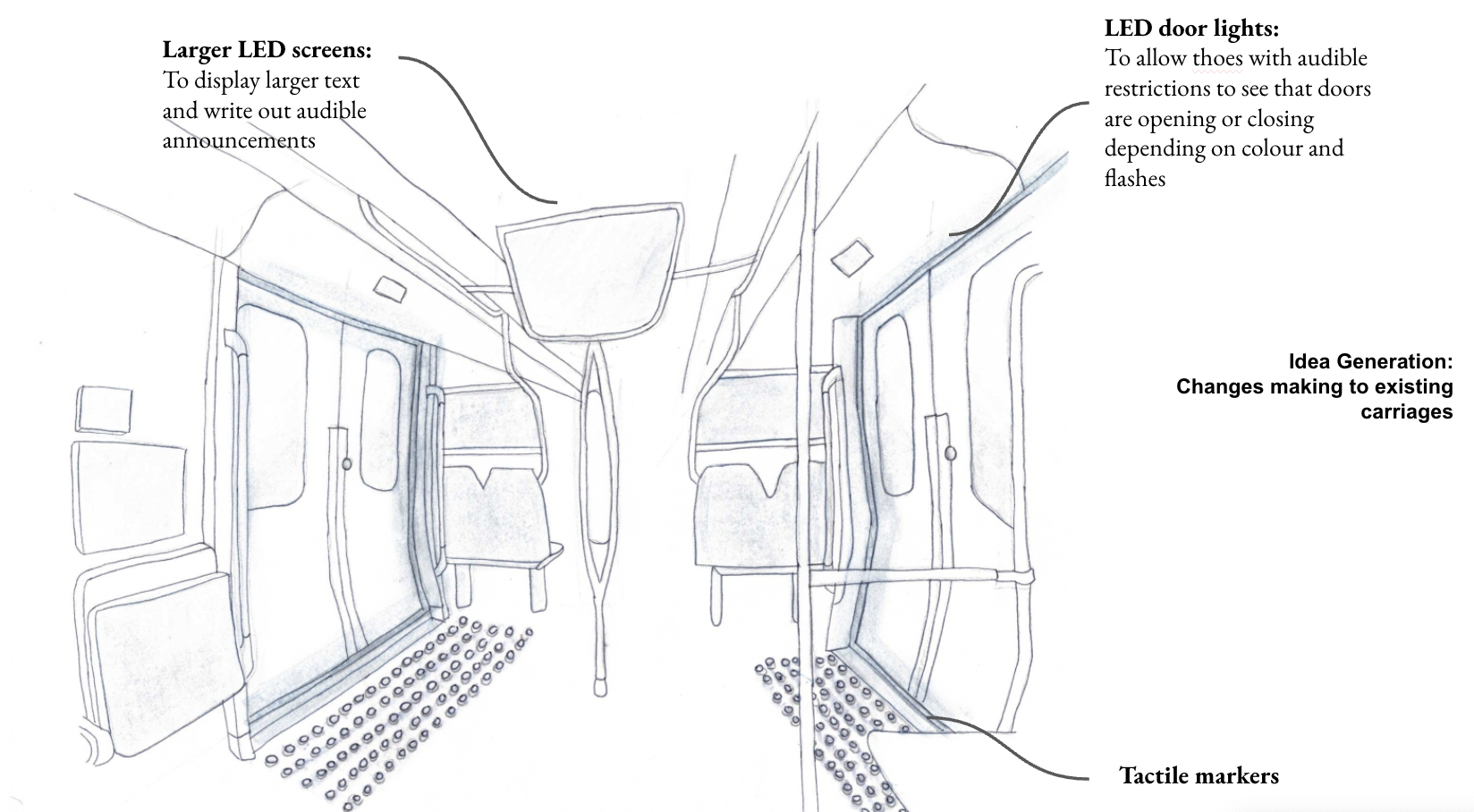
Our redesign introduced a number of user-centred accessibility improvements, including enlarged dynamic LED information screens for clearer zone-based messaging, universal colour-coded door lighting to provide intuitive boarding cues, integrated tactile guidance paths for vision-impaired passengers, and a GPS-triggered fail-safe announcement system that removed reliance on inconsistent driver communication. We also proposed an emergency override mode capable of delivering critical information visually and audibly across the full carriage.
Through translating the team’s research into both digital and physical visual outcomes, this project strengthened my ability to communicate design changes effectively while using CAD and rapid prototyping as tools for accessibility-led industrial design.